
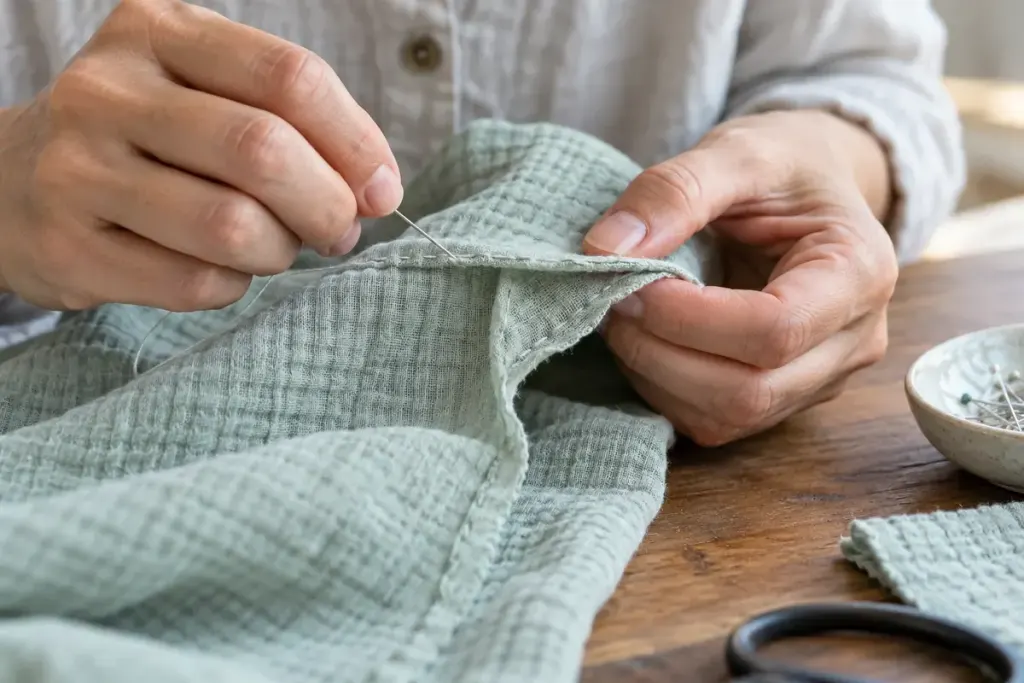
Double gauze can look like one softly crinkled cloth until a cut edge reveals two thin layers. Those layers are joined at intervals. They are meant to work together, so separating them as though they were an accidental lining changes the material you are sewing.
Before cutting, check the fabric supplier’s care instructions and the pattern’s suitability. A loose, airy fabric will not behave like a crisp shirting simply because both are woven. Its drape, surface texture and movement under the presser foot all deserve a small trial.
Let the fabric settle
Prepare the cloth using the recommended washing and drying method, then lay it out without stretching the crinkles flat by force. The aim is to cut the fabric in a condition close to how it will be worn and cared for.
On an offcut, mark a short line through both layers and watch whether they shift while you handle it. Use suitable pins, clips or temporary basting where needed. Keep the layers together at the seam allowance instead of pulling the lower one into place after stitching.
Try the intended needle, thread and stitch length on the same number of layers as the real seam. Inspect both sides for skipped stitches, puckering and caught folds. Adjust one variable at a time so you know what improved the result.
Finish without making a hard ridge
A seam finish should control the cut edges while preserving the garment’s intended softness. Test its bulk at an intersection, not only along a single straight seam. A finish that looks tidy flat may feel surprisingly thick at a cuff or neckline.
Keep a labelled sample with your chosen settings and care result. When the project resumes a week later, it provides a reliable reference. The characteristic softness is part of double gauze’s appeal; good preparation helps retain it rather than sewing against it.