
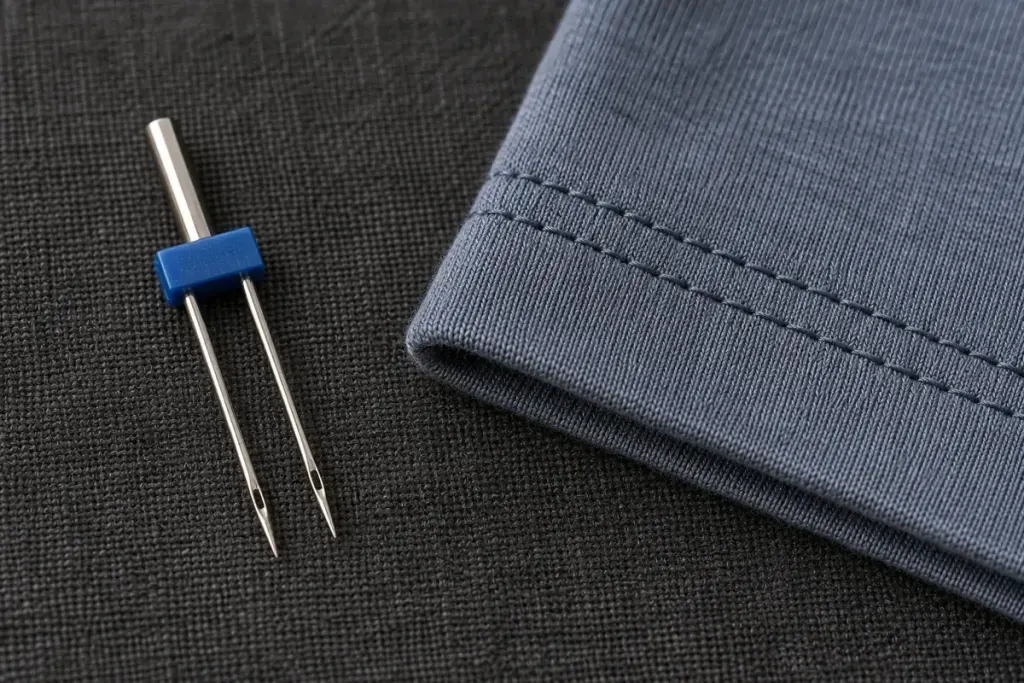
A twin-needle hem can look as though the garment has passed through a specialist machine. On a compatible domestic machine, two needles form parallel rows on the face while a single bobbin thread connects the stitches underneath. The result deserves its own setup and sample; it is not simply a single-needle hem sewn twice.
Compatibility comes before threading
Check the sewing machine’s manual for the permitted twin needle, needle spacing, presser foot and stitch settings. Brother’s model-specific twin-needle instructions, for example, describe two upper threads and restrictions on automatic threading. Those instructions illustrate why a needle that fits into the clamp is not automatically safe for every machine or stitch.
Follow the manual’s power-off or control-lock procedure while changing the needle and threading. Do not use an automatic threader unless your machine explicitly supports it with the installed twin needle.
Give the scrap the same layers as the garment
Fold a piece of the actual fabric to the planned hem depth. A test through one flat layer does not show how the finished edge will behave. Thread both upper paths and the bobbin as directed, then sew the approved stitch slowly.
Look at the sample from both sides. Are the upper rows even? Has a raised ridge formed between them? Does the hem lie flat after the fabric rests? Gently check whether the seam accommodates the stretch the garment needs, without pulling it to destruction.
For example, a sleeve opening that must pass over a hand has a different practical demand from a loose hem at the bottom of a top. Keep the sample beside the garment when deciding whether the result is suitable. Change one permitted setting at a time and keep a note of what improved.
A twin needle does not turn a domestic machine into a coverstitch machine, and it will not solve every stretchy-hem problem. If stitches skip or the needles might strike the foot or plate, stop and revisit the approved setup. A tidy sample is the useful milestone before the finished garment reaches the machine.