
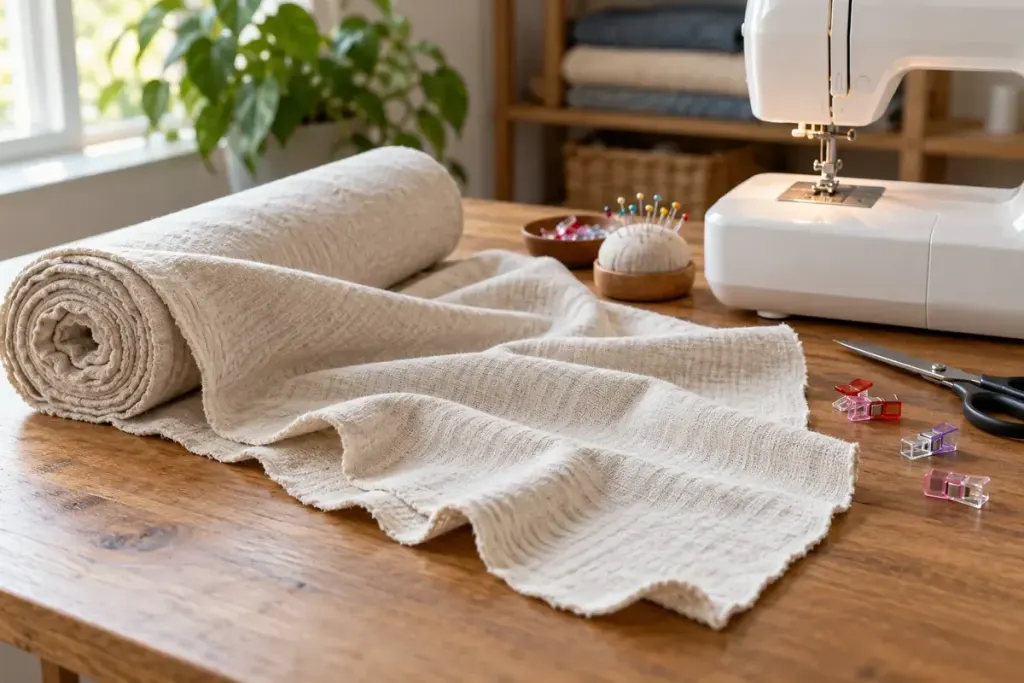
You cut a neat rectangle of jersey, put the scissors down, and find the edge rolling into a narrow tube. That behaviour can make a seam allowance disappear from view before the first stitch. It does not automatically mean the fabric was cut badly.
CottonWorks explains the structure of single and double knits, including the tendency of single jersey to curl and the greater stability of some double-knit structures. Fibre content alone will not tell you how strongly a particular piece rolls.
Keep the cut edge identifiable
Before moving the pieces, transfer the pattern markings using a method suitable for the fabric. Check that you are measuring the seam allowance from the actual cut edge, not from the visible top of the curl. Two rolled edges placed together can look aligned while one is sitting further inside the seam.
Unroll a short section gently and hold it with clips or appropriate pins, checking first that they do not mark the material. Work along manageable sections rather than pulling the whole edge taut. Stretching the cloth until it looks flat can introduce a new problem when it relaxes after sewing.
Test the handling, not just the stitch
Use an offcut with the same edge direction to rehearse how you will feed the seam. If you try a pressing aid or temporary stabiliser, check its compatibility and removal instructions on that sample. A product that behaves well on a sturdy cotton knit may be unsuitable for a delicate or heat-sensitive fabric.
Pause before the curled part disappears under the foot. Confirm the edge is still unfolded and the seam allowance remains consistent. Let the machine feed the fabric without dragging it from behind.
For future projects, keep a small labelled swatch showing how the fabric behaves after cutting and washing. “Jersey” covers a useful family of materials, not one universal handling recipe. Knowing how this piece curls is more helpful than trying to force every knit to behave like a flat woven cloth.