A strip of fabric looks straight on the cutting table. Around a curved neckline, it may either settle into the shape or fight every pin. The direction in which the strip was cut helps explain the difference.
Try the curve on scraps
With an ordinary woven fabric, a strip cut diagonally across the grain can usually accommodate a curve more readily than one cut along the straight grain. The exact behaviour depends on the weave and finish. Knits, loosely woven cloth and unusual fabrics need their own handling choices.
Cut two practice strips from the same spare fabric, keeping their widths equal. Label the grain direction in your notebook and lay each around a curved scrap resembling the project edge. Notice where one wants to wrinkle or stand away. Do not stretch the garment edge simply to make the comparison look successful.
This small trial also reveals whether a ready-made binding is too firm, too narrow or too bulky for your chosen fabric. Its colour match is only one part of suitability.
Distinguish shaping from pulling
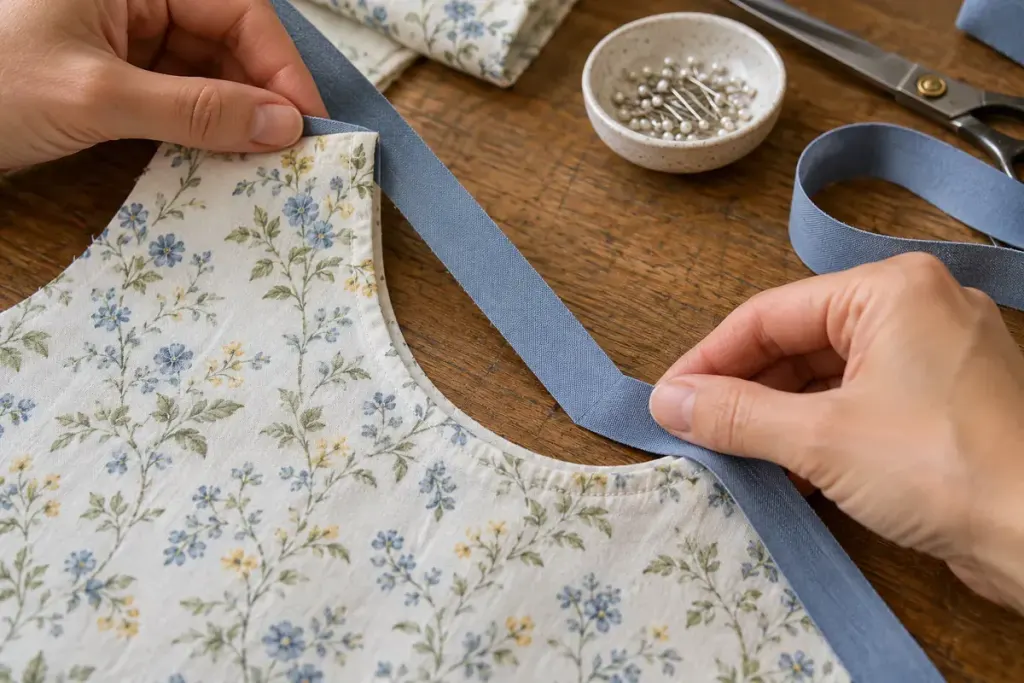
Follow the pattern’s attachment method and seam allowance. Pin or baste the binding so it follows the intended curve, checking that the underlying edge retains its shape. A strip pulled tight can draw up the opening; an over-generous strip can leave ripples.
Before stitching the final piece, inspect the sample from both sides. Does the folded edge cover the stitching as intended? Does the curve lie comfortably? If a join is required, test how its bulk behaves at the planned position instead of placing it at the sharpest curve by default.
Press using a temperature and method suitable for the fabric. Let the sample settle, then examine it again without pins holding it in an artificially flattering position.
Save the successful sample with the strip width and method written beside it. The lesson is not that every curved edge must use the same binding. It is that the grain direction, width and attachment method form a working combination—and a small curve of scrap is a cheaper place to discover the wrong one.