
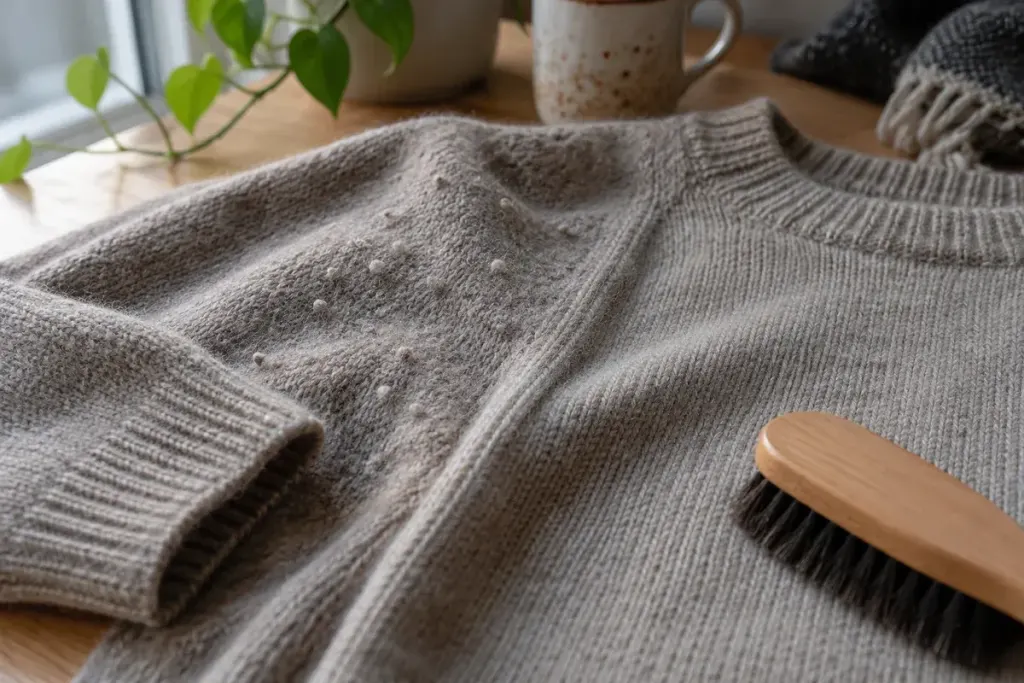
A favourite jumper develops tiny balls under the arms while the sleeves still look new. The label has not changed, but the surface has. Does that mean the fabric was poor quality, or that the garment needs a different care routine?
Pilling is one observation, not a complete verdict. How a garment is made, the fibres involved and the friction it encounters all help shape what you see. Start by looking at the pattern rather than immediately reaching for scissors.
Map where the rubbing happens
Lay the jumper flat in good light. Compare the underarm, side seams, cuffs and the place where a bag strap rests. Distinguish loose surface balls from a pulled loop, a thinning area or an actual hole. Those are different problems and should not receive the same treatment.
Woolmark’s wool-care guidance describes pilling as fuzzy balls on the surface and provides care information for wool garments. The garment’s own care label remains the starting point, especially for blends, embellished items and delicate knit structures.
Test the least aggressive option
Choose a removal method intended for that particular fabric and follow the tool’s instructions. Test a discreet area while the garment lies flat and supported. Avoid dragging a blade across stretched knitting or pulling a stubborn pill until surrounding yarn comes with it.
There is no prize for removing every tiny trace in one session. Stop if the surface looks thinner or catches on the tool. A repair professional may be a better option for valuable or unusually delicate pieces, particularly when you cannot tell pilling from damaged yarn.
Keep a useful wear record
Photograph one small area before and after gentle care, under similar light. After a few wears, check the same spot. This helps distinguish a one-off tidy-up from a garment that is repeatedly losing material.
Also note how it is worn. A rough shoulder strap over one side every day creates a different pattern from occasional desk wear. A practical experiment might be changing that strap position or wearing a smoother layer between surfaces, without changing several laundering habits at once.
When buying another jumper, inspect construction and care requirements as well as softness. Ask whether the retailer provides fabric-care advice and what its return policy covers. The most useful question is not “Will this ever pill?” but “How will this material behave in the way I actually wear it?”