“Jacquard” on a fabric label can sound like a material in the same sense as cotton or wool. It describes a way of controlling a woven pattern, however, and does not tell you the fibre composition by itself. Two fabrics sold under that description can feel and behave very differently.
The National Museums Scotland account of the Jacquard loom explains the system’s role in producing complex woven designs. That history helps clarify the shopping question: how the pattern is formed and what the threads are made from are separate pieces of information.
Turn the sample over
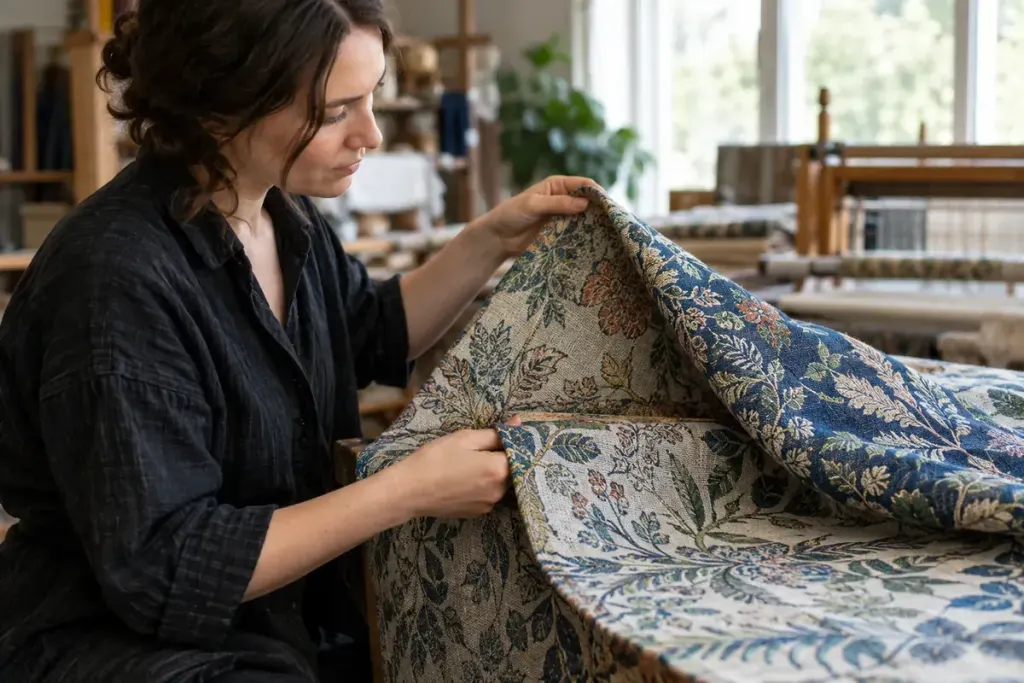
Look at the reverse without assuming that every jacquard is reversible. Some constructions expose floating threads or a less finished-looking surface. A pattern that looks beautiful on the face may need a lining or a protected position in the finished item.
Compare the sample with its intended use. A softly draping dress fabric and a firm upholstery cloth can both carry elaborate woven patterns. Neither the complexity of the motif nor the word jacquard establishes abrasion resistance, suitability for seating or an appropriate washing method.
Check the fibre percentages, usable width, pattern repeat and care instructions. Where the design has a clear top and bottom, lay out the pieces in one direction before estimating yardage. A large repeat can require more material than the same project in a plain weave.
Ask a specific question of the supplier
Instead of asking whether the fabric is “good quality,” explain the project: a frequently used cushion, a curtain, or a garment with a close-fitting seam. Ask for the relevant performance information and whether the sample represents the current stock.
Keep an offcut with the order reference. It gives future cleaning, repair and matching decisions a reliable starting point. Jacquard tells an interesting story about the pattern; the rest of the label tells you whether that particular cloth belongs in your project.