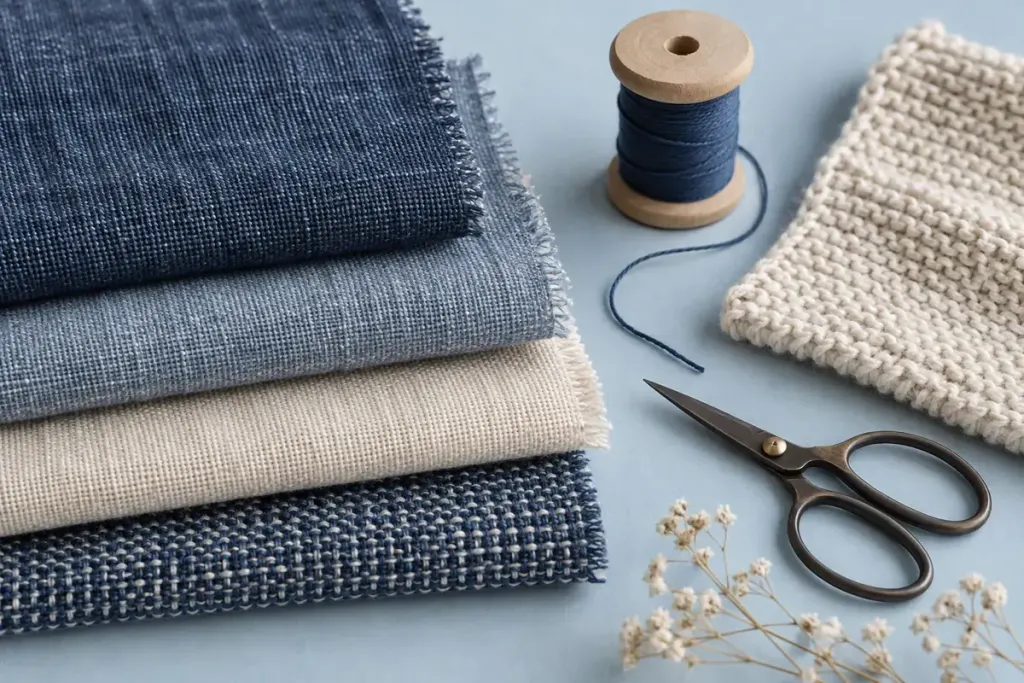
Two fabrics can both say “cotton” and still belong in very different projects. Fibre content describes the material; it does not describe every part of its construction, weight or behaviour. A small swatch helps turn a product description into something you can judge.
Spoonflower’s fabric specification chart is one manufacturer example of how content, weight, width and estimated shrinkage are listed separately. Its figures apply to its own fabrics, not every cloth with the same generic name.
Begin with the intended job
Write a sentence before handling the swatch: “I want a washable cushion cover that holds a square shape,” or “I want a loose shirt that falls softly.” That sentence gives your observations a purpose. A fabric can be lovely and still be unsuitable for that particular job.
If you are using a sewing pattern, read its recommended fabric type and stretch requirements first. A spontaneous substitution can affect fit, construction and the way a seam behaves.
Make four observations
- Drape: let part of the sample hang over your hand. Does it form soft folds or stand away? A small piece gives an indication, not a full-size garment simulation.
- Opacity: hold it against light and over a contrasting surface. Consider the light in which the finished item will actually be used.
- Stretch and recovery: gently test in both directions without distorting the piece. Follow the pattern’s specified method if a stretch percentage is required.
- Surface: view it from more than one direction. Texture, pile and print may make orientation important when cutting.
Keep the comparison fair
Place candidate swatches in the same light and use the same handling sequence. Label the back with the seller’s reference, date and intended project. Avoid relying on a phone photo alone: its colour adjustment and screen brightness may change your impression.
Try a simple comparison card with three columns: what I observed, why it matters, and what I still need to check. “Soft folds; promising for a loose sleeve; wash test outstanding” is more informative than “nice fabric.”
Leave room for the wash test
Feel before washing is only part of the decision. Check the manufacturer’s care instructions and try an appropriate measured wash test before committing valuable yardage. Do not machine-wash a sample labelled for a different care process merely to complete a checklist.
Save the labelled sample with your project notes. When you later wonder why a favourite shirt hangs well, the answer may already be in that small piece of cloth.