A button can be firmly sewn on and still make a coat difficult to close. When a flat button sits tightly against the cloth, the buttonhole layer has nowhere comfortable to fit. The fastening may pull into a little mound even though the button itself is the right diameter.
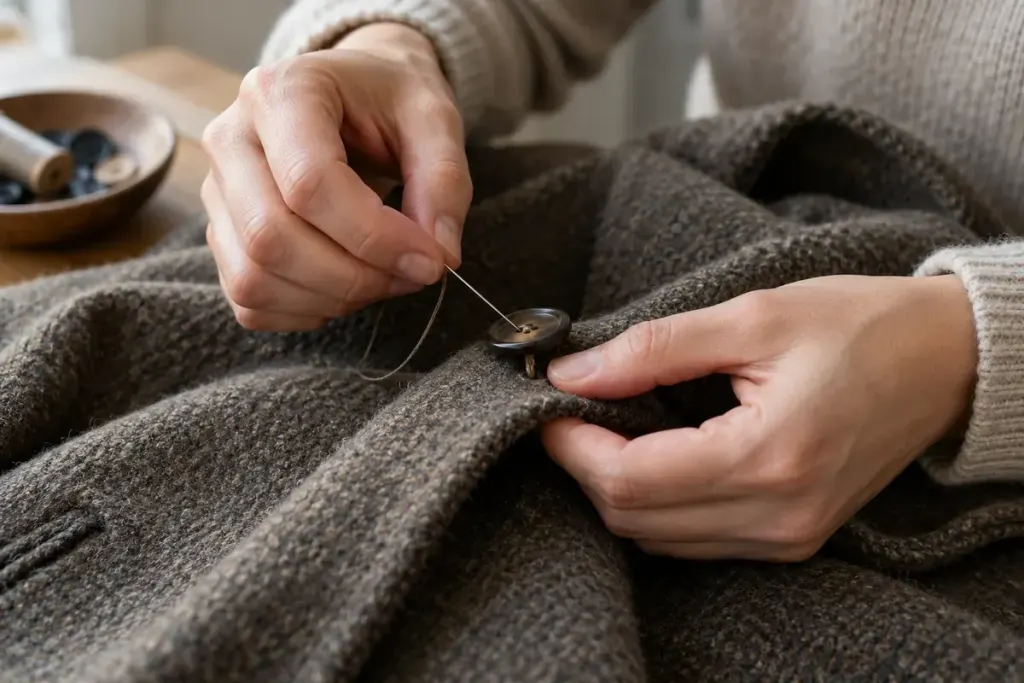
A thread shank is the short stem of thread between a sew-through button and the garment. It creates clearance for the layer that passes beneath the button. A button with a moulded loop on its back already has a built-in shank, so inspect the button before deciding how to attach it.
Use the garment as your thickness guide
Fold the actual buttonhole edge into its closed position and feel its thickness. Include the facing or interfacing inside it. A wool coat front needs different clearance from a thin shirt placket; there is no single gap that suits both.
On a scrap with matching layers, sew the button while maintaining a small space beneath it, then wrap the connecting threads to form the stem and secure the end. A temporary spacer can help keep that gap consistent. Seamwork’s button-sewing demonstration is a useful visual reference for the thread path and finishing.
Test the fastening before trimming everything
Close the sample or garment gently. The buttonhole layer should settle beneath the button without having to be forced into a cone. Then reopen it and check whether the button flops excessively or catches nearby fabric. Too much clearance can be inconvenient as well.
If the cloth is damaged where the old button pulled out, repair or reinforce that area before reattaching the button. More stitches through weakened fabric do not restore the missing strength. Check the repair from the inside too, where bulky knots may rub against a lining.
Finally, compare the replacement with neighbouring buttons while the garment is closed. Consistent position and usable clearance matter more than making the thread stem look identical to a tutorial photograph.