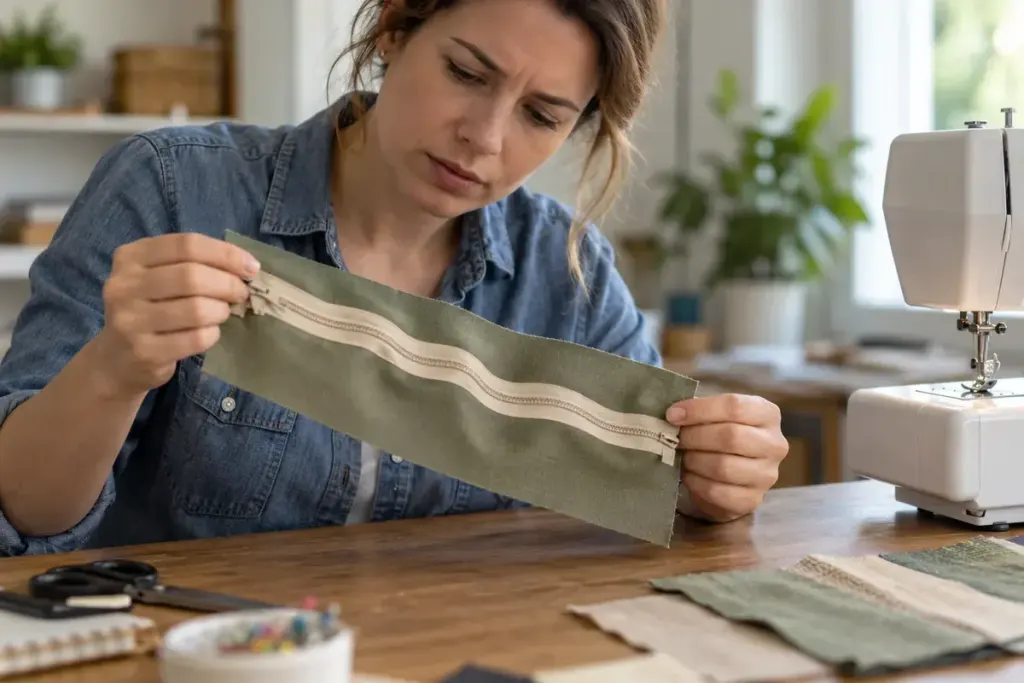
The zip closes, but its teeth rise and dip along a seam that should lie flat. Before unpicking the garment, lay it down without pulling and examine what is waving: the zip tape, the surrounding fabric, or both.
A sample made from the same fabric can save a second round of repairs. Include the same seam allowance, lining or support layer that the finished garment uses. A neat result on firm cotton does not diagnose a problem in a stretchy dress fabric.
Compare lengths without tension
Mark the intended opening and compare the two fabric edges in their relaxed state. If one edge has grown during handling, matching its ends to the zip can leave surplus length between them. Pulling the fabric smooth while stitching may hide that surplus temporarily and reveal it when the seam relaxes.
Baste the sample before machine sewing. Support the fabric on the table instead of letting its weight hang from the machine. Use the zip foot and installation method specified by your machine and zip instructions; different zip types do not share one identical sequence.
- Sew a short sample without stretching either layer.
- Lay it flat before pressing and record what you see.
- If the fabric needs stabilising, test a compatible support on a second sample.
- Compare the samples after the same finishing treatment.
Do not apply heat directly to unfamiliar plastic teeth or a delicate fabric. Test pressing temperature on a scrap and follow the care requirements. Pressing can improve a seam’s finish, but it is not a dependable way to remove extra fabric permanently.
Know when the zip itself is the mismatch
A very stiff or heavy zip may be unsuitable for a light fabric even when your stitching is accurate. Compare its weight and flexibility with the pattern recommendation. Keep the successful sample with notes about the support, stitch settings and handling. It becomes a reference for the next opening rather than another mysterious adjustment remembered only as “sew more slowly.”