
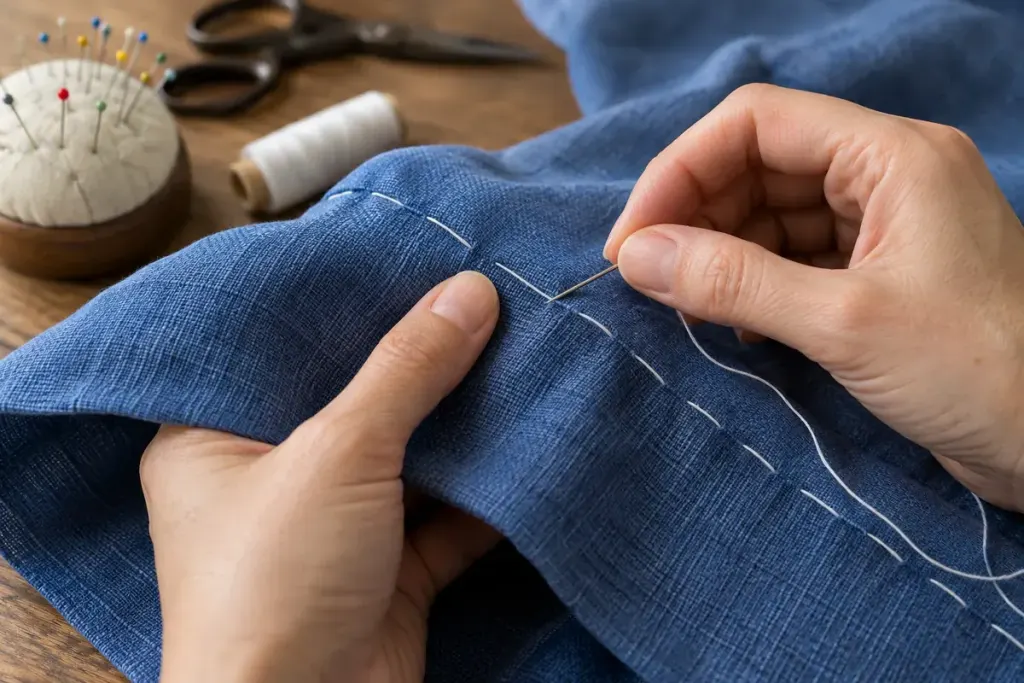
The pieces line up while pinned, then one layer creeps forward under the machine. A row of temporary basting stitches can hold the relationship long enough to judge the seam before permanent stitching makes corrections slower.
Basting means using easily removable stitches for a temporary purpose. Hand basting offers close control; machine basting can be useful on suitable fabrics. Test either method on an offcut, especially where needle holes or thread marks may remain visible.
Give the temporary seam one job
Perhaps you are holding a curved edge, checking the position of a zip or trying a garment section on. Identify that question first. Basting everywhere without a purpose creates extra removal work and can conceal the point you actually needed to inspect.
Align the pattern marks and edges without stretching one layer to force a match. Work manageable sections, then lay the fabric flat. If it already puckers before the final seam, permanent stitches are unlikely to solve the underlying mismatch.
Use a thread that is easy to identify and suitable for the material. Highly contrasting thread is convenient on some fabrics but can shed colour or leave fibres on others. Your offcut test should include removing the stitches, not only putting them in.
Inspect before making it permanent
For a fit check, move carefully and recognise that temporary stitching is not designed to carry the same strain as the finished seam. Look at the seam’s position and the fabric’s fall, and make corrections while removal remains straightforward.
Sew the permanent line according to the pattern and fabric requirements. Keep temporary stitches out of the final stitching path where the method calls for it, so they do not become unnecessarily trapped.
Remove the basting gently, supporting the cloth rather than pulling a long thread hard through it. Finish with a close look for missed threads and marks. The extra pass has earned its place when it lets you discover a problem before the seam becomes difficult to undo.