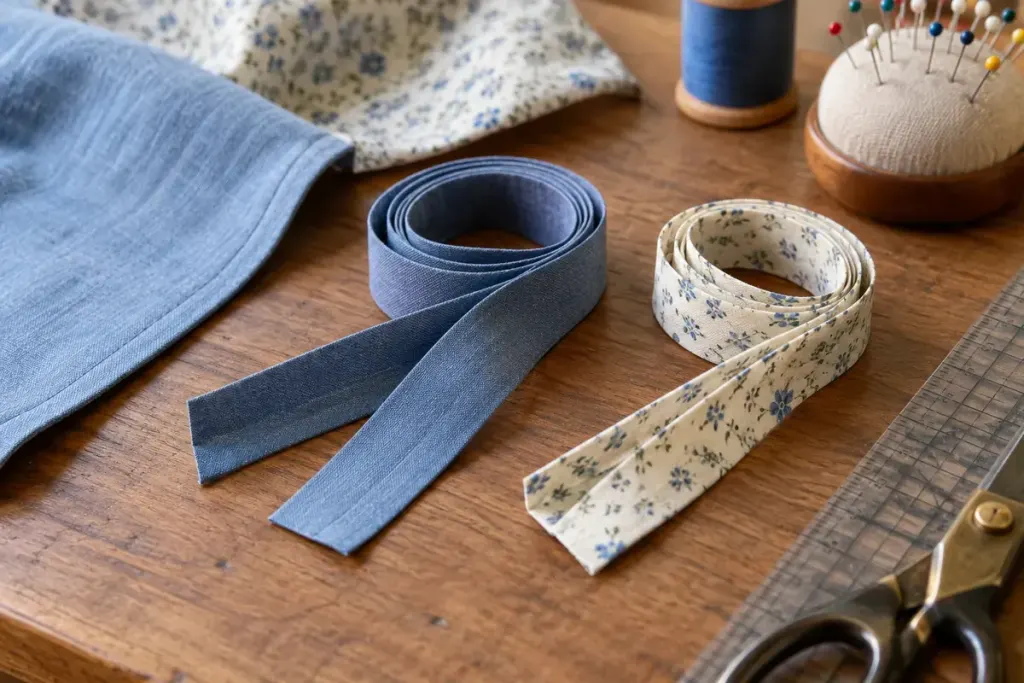
Two packets can both say “bias tape” and still produce different-looking edges. Before choosing a colour, unfold a short section and look at its structure. Single-fold tape has its long raw edges pressed inward. Double-fold tape adds another fold, creating a strip that can wrap around a fabric edge.
Seamwork’s bias-tape tutorial demonstrates the two forms and explains why a bias-cut strip can accommodate curves. The fold is a useful clue to intended use, but your pattern’s construction method remains the guide: some finishes turn completely inside, while others deliberately show a contrasting border.
Choose the result before choosing the packet
For a neckline with no visible binding on the outside, check whether the instructions describe a facing-style finish turned inward. For a visible border on a bib or an unlined garment edge, a wrapping finish may be the intended choice. Do not substitute solely because two packet labels show the same width; check whether that measurement describes the folded product or the final visible edge.
Make a small sample using the actual garment fabric. Include a curve if the project has one. A straight scrap can conceal problems that appear only when the binding changes direction. Press and stitch the sample using the planned sequence, then inspect both sides.
Look for three things: an edge that lies flat, stitching that catches the intended layer on the reverse and a finished width that suits the scale of the garment. If the reverse edge escapes the stitching, adjust the fold placement or use the construction method’s recommended second pass. Simply sewing farther inward on the front may create a visibly uneven border.
Keep the successful sample with the packet label. Recording the fabric, finished width and method makes the next project easier to repeat. Bias binding is a small detail, but a deliberate sample often saves an entire neckline from being unpicked.